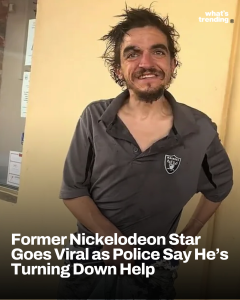
Former Ned’s Declassified School Survival Guide actor Tylor Chase has drawn renewed public attention after videos circulated online showing him unhoused in Riverside, California, prompting concern from fans and former colleagues and raising broader questions about how viral exposure intersects with homelessness and mental health.
The clips, which began spreading widely on social media in recent weeks, appear to show Chase living on the streets and engaging with passersby. Viewers quickly identified him as the former child actor best known for his role on Nickelodeon’s early-2000s sitcom, sparking an outpouring of reactions ranging from sympathy to speculation about his circumstances.
Riverside police confirmed that officers have made contact with Chase on multiple occasions. According to authorities, he has been offered shelter and assistance several times, including information about available services, but has declined those offers. Police emphasized that while outreach efforts continue, adults are generally permitted to refuse help unless they meet specific legal criteria requiring intervention.
As the videos gained traction, Shaun Weiss, another former child star known for The Mighty Ducks, publicly offered support. Weiss, who has spoken openly about his own struggles with addiction and recovery, said he was willing to help Chase access treatment and resources, drawing attention to the challenges many former performers face after early fame fades. Weiss’s comments resonated with viewers familiar with his own highly publicized recovery journey.
This is not the first time Chase’s situation has surfaced online. The story initially gained momentum months earlier, after a TikTok user identified him in September. That post led to the creation of a GoFundMe campaign, which briefly raised funds before being taken down at the request of Chase’s family. At the time, relatives reportedly expressed concern about privacy and the unintended consequences of public fundraising tied to viral content.
The episode highlights the complicated dynamics that can emerge when private hardship becomes public spectacle. Advocates for people experiencing homelessness note that viral attention can sometimes generate short-term financial support, but it can also create pressure, misinformation, and loss of autonomy for the individual involved.
Former child actors, in particular, face unique vulnerabilities. Sudden fame at a young age, inconsistent employment, and limited long-term support structures have been widely cited as risk factors for financial instability and mental health challenges later in life. While many transition successfully into adulthood, others struggle once the spotlight fades.
For now, officials say outreach efforts in Riverside will continue, and community members are being encouraged to support local organizations that provide housing, mental health services, and addiction treatment. Chase’s situation remains fluid, and those close to the matter stress that lasting help often requires patience, consent, and sustained support rather than momentary viral attention.
As the videos continue to circulate, the story has become a reminder of how quickly nostalgia-driven social media moments can turn into complex human stories—ones that extend far beyond a familiar face from television screens of the past.