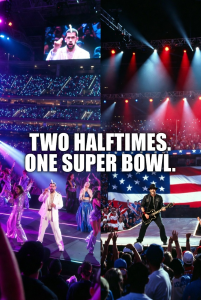
As Super Bowl Sunday approaches, the biggest competition may not be on the field — but on the screen.
Turning Point USA is launching a highly publicized “All-American Halftime Show” in direct counter-programming to the NFL’s official Super Bowl halftime performance, headlined this year by global music star Bad Bunny. The alternative event, led by TPUSA CEO Erika Kirk and headlined by Kid Rock, is shaping up to be one of the most politically charged entertainment moments in Super Bowl history.
The announcement comes amid growing backlash from conservative audiences following the NFL’s decision to feature Bad Bunny, an artist whose recent public statements have ignited controversy. At the Grammy Awards, Bad Bunny made remarks critical of U.S. Immigration and Customs Enforcement, repeating the phrase “ICE out,” which quickly went viral and sparked renewed calls for boycotts from critics who argue the league is injecting politics into entertainment.
Supporters of the All-American Halftime Show say the move is not about protest, but representation. TPUSA has framed the event as a celebration of traditional American culture, featuring artists associated with country, rock, and Americana music. Promotional material emphasizes patriotism, unity, and what organizers describe as “values ignored by mainstream entertainment.”
Kid Rock’s involvement has amplified attention. Known for his outspoken political views and history of cultural commentary, the performer has long been a polarizing figure — and that polarization is now fueling engagement. Fans praise the counter-show as a bold stand, while critics dismiss it as reactionary and divisive.
Erika Kirk described the event as a response to what many Americans feel is a widening gap between elite cultural institutions and everyday viewers. “People want an option,” she said in a recent statement, arguing that the Super Bowl should reflect the nation as a whole.
Meanwhile, defenders of the NFL’s choice argue Bad Bunny’s selection reflects America’s evolving cultural landscape and the league’s global audience. They say the backlash highlights resistance to diversity and multilingual representation on one of the world’s biggest stages.
Media analysts note that counter-programming during the Super Bowl is rare — and risky — but the controversy itself may be the point. With millions already debating which halftime show they’ll watch, both events are likely to see record-breaking engagement online, regardless of viewership numbers.
As kickoff nears, the question isn’t just who will win the game — but which version of America viewers will tune into when the halftime clock starts.