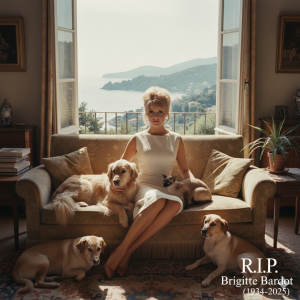
PARIS — Brigitte Bardot, the iconic French actress whose image defined an era of cinema and whose influence extended far beyond the screen, has died at the age of 91. Her foundation confirmed that she passed away peacefully at her home in southern France. No cause of death was disclosed.
Bardot rose to international fame in the mid-1950s, becoming one of the most recognizable faces in the world almost overnight. Her breakthrough came in 1956 with And God Created Woman, a film that challenged social conventions and transformed her into a symbol of sexual liberation. With her uninhibited screen presence and distinctive style, Bardot reshaped the image of women in post-war cinema and helped usher in a new cultural moment in Europe.
Often referred to simply as “B.B.,” Bardot starred in more than 40 films during a career that spanned nearly two decades. She worked with some of the most prominent directors of her time and became a fixture of global popular culture, inspiring fashion, music and art. Her blonde hair, effortless style and rebellious persona made her an enduring emblem of 1960s modernity.
Despite her fame, Bardot’s personal life was marked by turbulence. She married four times and lived much of her life under intense public scrutiny. In 1960, she gave birth to her only son, Nicolas-Jacques Charrier. While her relationships often drew headlines, Bardot increasingly expressed discomfort with celebrity and the pressures of the film industry.
In 1973, at the height of her fame, Bardot made the unexpected decision to retire from acting. She later described the move as a necessary escape from a life she found emotionally exhausting. From that point on, she devoted herself almost entirely to animal rights, a cause that would come to define her later years.
In 1986, she founded the Brigitte Bardot Foundation, which became a prominent voice in international campaigns against animal cruelty. The organization advocated for animal welfare laws, opposed seal hunting and fought against the mistreatment of animals in entertainment and agriculture. Bardot’s activism earned her admiration from supporters around the world and established her as one of France’s most visible advocates for animal protection.
Her later life, however, was not without controversy. Bardot’s outspoken views on social and political issues frequently sparked criticism and legal challenges, complicating her public image and dividing opinion in France. Still, even her critics acknowledged the scale of her cultural impact and the sincerity of her commitment to animal welfare.
Bardot is survived by her husband, Bernard d’Ormale, and her son. She spent her final decades living quietly in Saint-Tropez, surrounded by animals, largely removed from public life.
Brigitte Bardot leaves behind a legacy defined by contrasts: a glamorous film star who became a reluctant celebrity, a symbol of liberation who sought seclusion, and a cultural icon who transformed her fame into lifelong activism. Few figures in French history have left such a lasting and complex mark on cinema, society and global culture.
