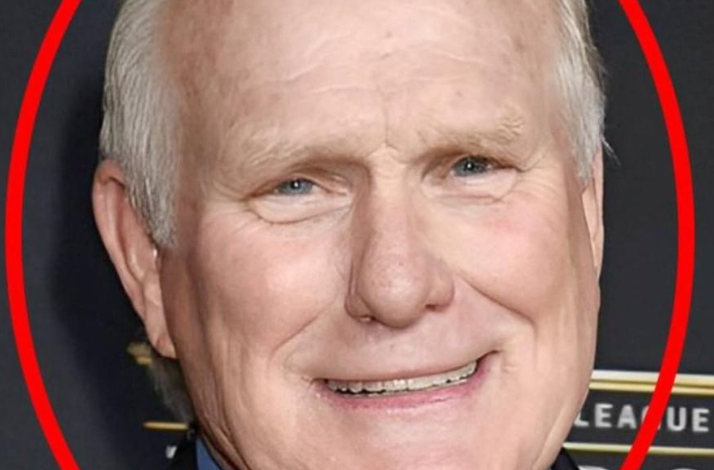
For decades, Terry Bradshaw has been the personification of American resilience and infectious joy. From the heavy-hitting trenches of the 1970s NFL to the polished, high-energy desks of sports broadcasting, his presence has been a constant in the lives of millions. We know him as the four-time Super Bowl champion with the Pittsburgh Steelers, the Hall of Fame quarterback with the cannon arm, and the boisterous, self-deprecating analyst who makes Sunday mornings feel like a living room conversation. Yet, behind that familiar boisterous laugh and the gleaming smile, Bradshaw recently navigated a journey more daunting than any two-minute drill or blitzing linebacker. He was fighting for his life against two distinct forms of cancer, a battle he largely kept in the shadows until he emerged on the other side with a story of profound survival.
The revelation of his health crisis caught the public by surprise, primarily because Bradshaw had spent the previous year appearing on television with the same trademark vigor he has always possessed. While viewers saw the “Blonde Bomber” cracking jokes and breaking down plays, he was privately enduring a grueling medical marathon. His diagnosis was not singular; he was struck by a double-fronted assault. First came bladder cancer, a diagnosis that required immediate intervention and ongoing monitoring. However, as he was processing that first blow, a second, more insidious threat emerged: Merkel cell carcinoma. Found on his neck, this rare and highly aggressive form of skin cancer is notorious for its speed and lethality if not caught in its earliest stages.
The sheer weight of a dual diagnosis would be enough to break the spirit of most, but Bradshaw approached the situation with the same grit that defined his legendary football career. He did not seek the spotlight for his suffering. Instead, he chose a path of quiet determination, undergoing surgeries and radiation treatments while continuing to fulfill his professional obligations. This was not born of a desire to hide, but rather a commitment to maintaining a sense of normalcy and purpose. For Bradshaw, the work was a tether to the world he loved, a way to keep his mind focused on life rather than the disease. He later admitted that the physical toll was immense, but the mental and emotional burden of waiting for results and navigating the uncertainty of recovery was even greater.
During the most difficult stretches of his treatment, Bradshaw leaned on a foundation built of three pillars: world-class medical care, a devoted inner circle of family and friends, and a deeply rooted faith. He has often spoken about how his spirituality provided a “steadiness” during the storm, offering a sense of peace when the medical jargon and the physical exhaustion became overwhelming. He credits early detection as the literal lifesaver in his story, emphasizing that without proactive screening, the Merkel cell carcinoma could have resulted in a far different outcome. His experience serves as a sobering reminder that even those who seem larger than life, who appear invincible behind a microphone or a helmet, are subject to the fragilities of the human body.
When Bradshaw finally chose to share his journey with the world, he did so with a refreshing lack of artifice. He didn’t frame himself as a superhero who conquered a villain; he spoke as a man who had been scared, tired, and humbled. He acknowledged the moments of fear and the long, quiet hours of recovery that the cameras never captured. This transparency resonated deeply with fans across generations. It humanized a legend, making his victory over cancer feel not like a distant achievement, but like a shared human experience. The response was a massive outpouring of support, with many fans admitting that hearing Bradshaw’s story gave them the push they needed to finally address their own health concerns or schedule long-overdue checkups.
One of the most striking aspects of Bradshaw’s post-cancer life is the subtle but profound shift in his perspective. While the charisma and humor remain intact, those who know him best notice a new layer of reflection. There is a “quieter perspective” beneath the jokes—a sense of gratitude that is no longer abstract, but deeply felt in every ordinary moment. He has transitioned from a man focused on the “wins” of the industry to a man who treasures the simple gift of time. He has noted that while winning Super Bowls brought a sense of professional pride, beating cancer brought a sense of profound humility. It stripped away the distractions of fame and left him with a clear view of what truly matters: family, health, and the opportunity to help others.
Now officially cancer-free, Bradshaw is not simply returning to his old life; he is moving forward with a mission. He recognizes that his platform allows him to reach a demographic that is notoriously difficult to engage in healthcare conversations: men, particularly those of his generation, who often view seeking medical help as a sign of weakness. Bradshaw is using his voice to dismantle that stigma. He advocates for preventive care and early screening with the same passion he once used to call plays in a huddle. He views his survival not just as a personal win, but as an opportunity to be a catalyst for change. If his story encourages one person to take a symptom seriously or to visit a doctor before a problem escalates, he considers the entire ordeal a worthwhile sacrifice.
The story of Terry Bradshaw’s battle is ultimately not one of invincibility, but of vulnerability handled with immense dignity. It reminds us that strength is often found in the quietest moments—the moments when there are no cheering crowds or bright lights. It is found in the decision to keep going when you are exhausted, to trust in others when you are afraid, and to maintain hope when the path is obscured. Bradshaw’s journey highlights the reality that life is unpredictable and time is a finite resource. By sharing his struggle, he has provided a roadmap for others facing their own “uncategorized” challenges, proving that resilience is not about the absence of fear, but the persistence through it.
As he looks toward the future, Bradshaw remains a staple of American sports culture, but his legacy has been expanded. He is no longer just the quarterback who led a dynasty or the broadcaster who defines Sunday afternoons. He is a survivor, an advocate, and a man who faced his own mortality and chose to respond with grace and a renewed sense of purpose. In the grand narrative of his life, this chapter of recovery and advocacy may well be his most significant. It is a victory that wasn’t won on a field of grass, but in the quiet corridors of hospitals and the private corners of the heart. Terry Bradshaw has emerged from the fight not just with his health, but with a message of hope that will undoubtedly continue to inspire and save lives for years to come.
